


Pre-College Programs for Neurodivergent Teens: Inside Tufts’ College 101
Posted by
For many teens with autism, ADHD, dyslexia, and other neurodiverse learning styles, the question isn’t “Am I capable of college?”—it’s “Will college be set up for me to succeed?”
The case for neurodivergent pre-college programs
Research shows that autistic students are enrolling in college at growing rates but graduate far less often than their neurotypical peers. One large review found that fewer than 40% of autistic students completed a postsecondary program, compared to about 60% of neurotypical students. The gap has nothing to do with intelligence but with preparation, support, and fit.
Short, structured pre-college experiences can make a big difference in a neurodivergent student’s success. They help students build confidence, independence, and practical life skills in a supportive setting. But these programs are still relatively rare—most options are either full-year transition programs, residential gap-years, or general summer camps that aren’t tailored to the realities of college life.
That’s where College 101 for Neurodivergent Students, a new Tufts University College Pre-College program, comes in.
Neurodiverse teens need a new on-ramp to college
College asks students to juggle executive functioning, social navigation, self-advocacy, and shifting academic expectations simultaneously. Many neurodiverse students (including those with autism, ADHD, learning disabilities, or other cognitive differences) find the transition especially challenging:
- Campuses are noisy, busy, and full of sensory demands.
- Routines become less predictable.
- Students are suddenly expected to manage their own schedules, accommodations, and support systems.
Studies of autistic college students highlight that while many are strong academically, they often hit barriers around navigating disability services, managing time and workloads, and finding supportive peers and mentors.
Introducing College 101 for neurodivergent students at Tufts
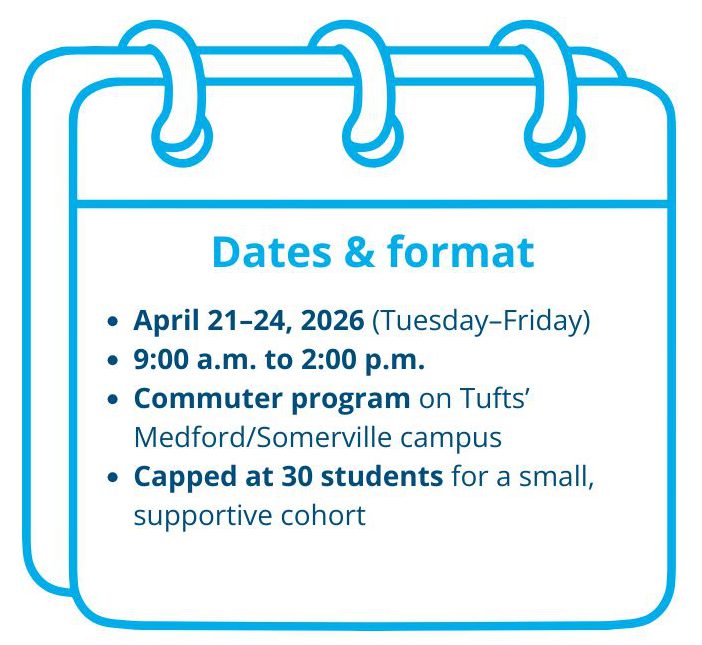
College 101 offers a short, focused, commuter-format intensive where teens can “try on” college life with a clear structure and neurodiversity-affirming support.
Designed for
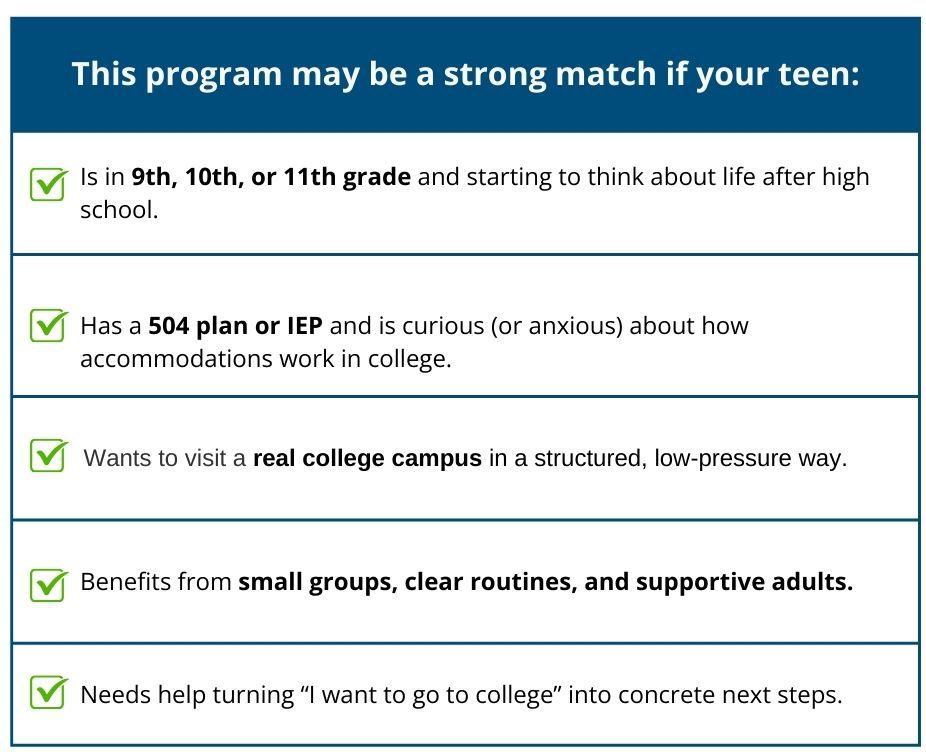
- High school students in grades 9–11.
- Teens who are documented as neurodivergent (autism, ADHD, or specific learning disabilities) and who want structured preparation for college life and learning.
- Students who have (or are eligible for) an IEP or 504 plan and are ready to think about college—whether they’re excited, anxious, or somewhere in between.
This four-day pre-college program for neurodivergent students blends college skills, campus navigation, and community building. It’s designed in collaboration with Tufts’ StAAR Center, which supports Tufts undergraduates with academic coaching, accommodations, and learning strategies.
What students will do: A how-to guide for college life
Throughout the week, students move together as a small cohort, with clear routines and lots of adult support.
Navigate a real college campus—together.
Students will visit, in person, the resources that provide help. As they explore classrooms, dining halls, and essential resource centers across the Tufts campus, they’ll walk to the same offices real college students use for accommodations and support, building comfort and confidence in the spaces they’ll need most.This kind of concrete, “in the environment” practice aligns with best practices for neurodivergent learners, who often benefit from seeing and rehearsing new routines before they’re expected to do them independently.
Meet neurodivergent college role models
Students will connect with:
- Staff from the Tufts StAAR Center, who can demystify how college accommodations work.
- Current Tufts students who identify as neurodivergent and can speak honestly about transitioning from high school to college.
Peer mentoring and near-peer role models support students’ adjustment and confidence in college. Seeing neurodiverse college students thriving can help teens picture themselves on campus—and show parents concretely what’s possible.
Learn what to expect in college classrooms
Through targeted mini-seminars, students will explore:
- How college classes differ from high school (syllabi, office hours, pacing, homework expectations).
- How to communicate with professors and advisors.
- Neurodivergent-affirming strategies for managing reading, note-taking, and exams.
Best practices for supporting autistic and other neurodiverse students emphasize individualized planning, proactive accommodations, and explicit teaching about expectations—all elements baked into this program’s design.
Try light “lab-style” college learning
Students will also get a taste of college-level inquiry and experimentation through low-pressure, hands-on activities designed to be accessible and fun. Without the pressure of grades, students are freed to indulge their curiosity while exploring and becoming more comfortable in an unfamiliar environment.
Outcomes: What families and students take home
By the end of the session, each student will leave with:
- A personalized college-readiness roadmap
During the program, students will work with staff to create an individualized college-readiness plan that can include:
- A customized timeline for exploring colleges and programs.
- A list of supports and accommodations they’ll likely need in college.
- Action steps for strengthening executive functioning, self-advocacy, and daily living skills.
Tools like these “roadmaps” are strongly recommended by transition specialists and neurodiversity advocates to bridge high school and adulthood.
- Knowledge of accommodations & self-advocacy
Students won’t just know that services exist—they’ll have:
- Practiced what to say when requesting accommodations.
- Learned the differences between high school IEP/504 processes and college disability services.
- Gotten language they can use to describe their learning profile, sensory needs, and communication preferences.
Research suggests that clear self-advocacy and early connection with disability services are associated with better outcomes for autistic college students.
- A clearer picture of “college fit”
For some teens, College 101 may confirm: “Yes, I’m ready to aim for a four-year college experience.” For others, it may spark interest in community college, technical programs, or a slower path that includes a bridge or transition year.
Either way, students and families will leave with more information, confidence, and options—instead of waiting to “see what happens” during the first semester of college. This proactive approach decreases anxiety and increases success for everyone.
How Tufts’ College 101 program compares to other options
There are longer-term programs geared toward neurodivergent young adults. College 101 for Neurodivergent Students at Tufts fills a different niche:
- It’s short and structured (just four school-day-length sessions).
- It’s commuter-based, making it more accessible for local families who aren’t ready for residential programs.
- It’s closely connected to a major research university, providing students with authentic exposure to a college campus and its services.
For many families, this program can be a first step—a way to gauge readiness before investing in a longer summer or bridge program.
Is College 101 a good fit for your teen?
Helping your neurodiverse teen find the right college fit
With the right preparation, neurodiverse teens can approach college with clarity, confidence, and a sense of community. Tufts College 101 for Neurodivergent Students helps students practice campus life in a safe, structured way and create a personalized roadmap. Early, focused preparation is one of the most powerful gifts families and educators can offer. Try Tufts on your terms and learn about College 101.

Blog Categories
- Career Advice
- College Admissions
- Colleges & Universities
- Financial Aid and Scholarships
- For Counselors
- For Parents
- For Students
- Gap Years
- Mental Health and Wellness
- Online Learning
- Performing and Visual Arts
- STEM Majors and More
- Summer Programs
- Teen Volunteering
- Trade & Vocational Schools
- Tutoring & Test Prep







Organization with listings on TeenLife? Login here
Register for Free
We’re here to help you find your best-fit teen-centered academic and enrichment opportunities.
Forgot Password
"*" indicates required fields