


 Currency, credit card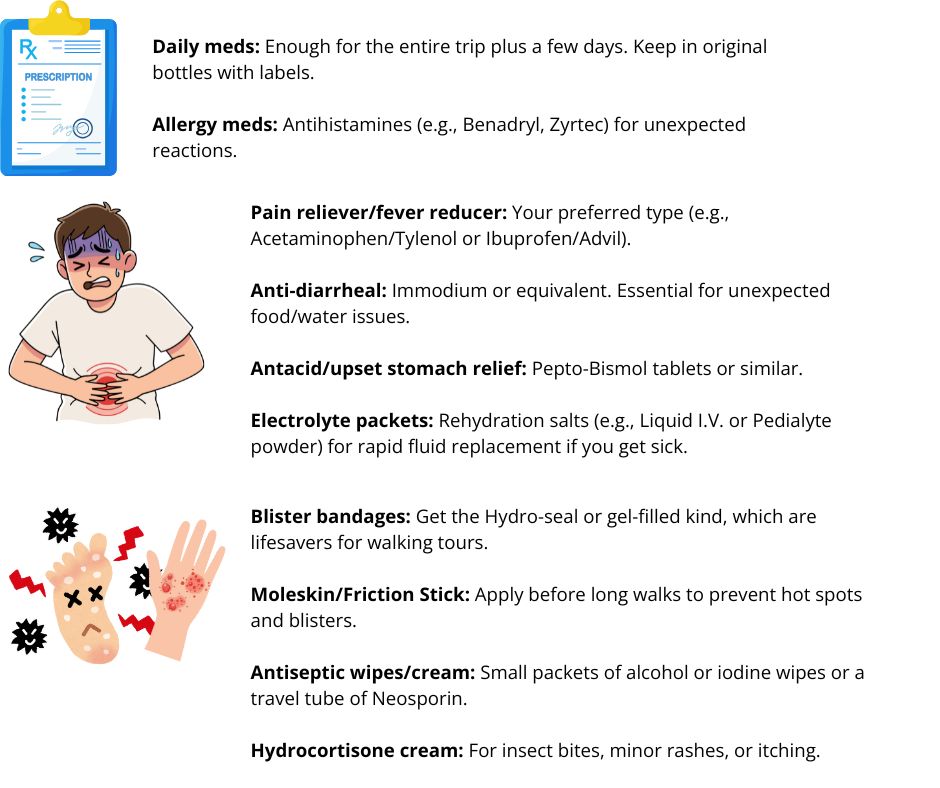


Passport, program, and polish: The rules of respect and what to pack before traveling abroad
Posted by
Hey future globetrotter!
You’ve chosen your summer program and booked your flight. Soon you’ll board a plane to an incredible, faraway place where your real adventure awaits. You’ve mastered the logistics, maybe with a little help from your family, but now you must master the art of the confident, respectful traveler. Not to worry — a little common sense goes a long way.
Before you grab your carry-on, you’ve got a little more prep work to do, like understanding the local “vibe” (unspoken rules of respect), what to wear, and packing a smart first-aid kit. Getting these things right will help you be a confident, cool (and prepared) traveler.
A short program probably won’t transform you into a local, but you will gain the cultural literacy that can help you navigate new environments with grace. It’s so much better and more fun to become an engaged participant in the world, rather than a wallflower who stays on the sidelines and observes for fear of “doing something wrong.”
No worries — we’ve got you covered!
The rules of respect: Tipping, greetings, and dress codes
If you want to make a good impression (and avoid looking like a clueless or classless tourist), start by being respectful. Show that respect through your words, actions, and awareness of local customs. Here are three non-negotiables:
Tipping on a tightrope
What you do with money differs dramatically depending on where you are. In the U.S., tipping 15% to 20% is standard for good service. Overseas? Toss that assumption aside. Tipping makes a cultural statement, and that statement varies wildly across continents.
- East Asia (Japan, South Korea, China): Tipping is taboo
In Japan, tipping is considered rude, confusing, or even insulting. In a country that prides itself on professionalism, service is expected to be excellent. Trying to give a server extra money can imply that you think they’re not paid a fair wage. Show your appreciation by complementing the chef or saying “Arigatou gozaimasu” (thank you very much). In China and South Korea, high-end tourist hotels might accept a small tip, but it’s generally not customary and can cause confusion. - Western Europe (France, Italy, Spain)
In much of Europe, your bill might already include a small service charge, sometimes labeled servizio incluso or service comprise. If so, you don’t need to leave anything extra. If a service charge isn’t included or the service was fantastic, you can just round up the total to the nearest euro or two (if your bill was €38.50, you might leave €40). Handing over an extra €5 might get you a weird look because it’s seen as overly generous or misunderstanding the culture. You don’t need to leave a large percentage-based tip, as is typical in the U.S. - Latin America: Standard but modest Tipping is more common in countries like Mexico or Argentina than in Europe. Most people leave between 10% and 15% for good restaurant service, but the practice is still more flexible than in the U.S. Check your bill before tipping to see whether the restaurant already applied a service charge.

A good rule of thumb? Do a quick Google search for your specific country before you leave, and ask your program coordinator about the expectations. Don’t let the fear of awkward money exchanges stop you from enjoying an amazing meal.
The greeting game
You might feel the most awkward when greeting a citizen from a different country, but it’s actually fun. The universal starter is a friendly, confident smile and direct eye contact (unless you’re visiting an Asian country, as eye contact has its nuances). When in doubt, let the local make the first move.
- East Asia: The art of the bow (Japan) and minimal contact (South Korea)
In certain Asian countries like Japan, a bow (ojigi) signifies deep respect, and the depth of your bow matters. Don’t stress too much, but watch how the locals interact with their elders or people in authority. As a foreigner, a simple, slight nod of the head is usually sufficient for casual greetings. Reserve deeper bows for elders, people in authority, or formal business settings. Never hug or kiss a Japanese person upon meeting unless they initiate it. Public displays of affection (PDAs) are generally minimized.Slight bows are also common in South Korea, especially when greeting older people or superiors. Handshakes are acceptable, particularly in business settings, but they’re often softer than the firm grip favored by Westerners. Pro tip for Japan: When exchanging a business card (meishi), receive it with two hands, examine it carefully, and place it respectfully on the table in front of you. Resist the urge to immediately put it in your pocket. - Western Europe & Latin America: A closer, more personal greeting
In France, Spain, Italy, and much of Latin America, expect a closer greeting, often involving cheek-to-cheek kisses or a hug, even with people you’ve just met socially. These greetings aren’t romantic — just social. The number of kisses varies. You may trade one, two, or even three or four air-kisses. Two is the standard for France, but some regions exchange one or three kisses. In Spain and Italy, two is the norm. In Colombia, it’s usually one kiss.
The rule is easy! Pay attention. Watch how the locals interact and mirror their gestures. If someone leans in for one kiss, lean back in the same direction for the second (or third). If you’re really unsure or uncomfortable, a handshake is a safe default, especially in professional or more formal contexts, until the other person initiates a cheek kiss.
In Brazil, Chile, and some other Latin American countries, expect a smaller sense of personal space and a great deal of warmth. People will stand closer to you during conversation and often use touch (a hand on your arm or shoulder) to emphasize a point. Try to resist the temptation to step back, which they can interpret as coldness or rejection.

Dress code decorum
Your summer wardrobe might consist of tank tops and shorts, but make sure your packing list includes a few items that cover more skin. Covering your shoulders and legs is a way to show respect for sacred places and avoid inadvertently insulting local modesty standards.
- Catholic Europe (Italy, Greece, Vatican City)
When I took students to Italy and Greece in the summer, I knew that cathedrals and other places of worship required a certain level of formality in what visitors wore. I reminded my students to bring scarves or sweaters, and to wear shorts that are below the knee or a long skirt. Some churches we visited, like Basilica di San Marco in Venice and the Church of Panagia Ekatontapiliani in Paros, provided paper drapes to cover bare shoulders.
The rule: Men and women must cover their shoulders and knees. No spaghetti straps, tank or crop tops, or shorts/skirts above the knee.
A quick fix: Pack a lightweight cardigan, skirt or pants you can fold and stash in your knapsack for visits to sacred sites. If you’re wearing a sleeveless top, you can quickly drape it over your shoulders before entering the building. Men can wear convertible pants (pants that zip into shorts), and women can wear longer skirts or capris. (Or do what my students and I did. We tied a scarf or sarong around our waists like a makeshift skirt. Worked great!) - Temples and shrines (Asia)
In countries like Thailand (Buddhist temples) or Japan (Shinto shrines and temples), the dress code is similar to Europe, with a focus on modesty and the added element of footwear.
The rule: Always remove your shoes before entering any sacred building, private home, or traditional restaurant (ryokan) in Japan. If you’re wearing a hat, remove it when you enter a temple.
A quick fix: Wear clean, simple socks (no holes!) and easy slip-on shoes to save time and embarrassment at an entrance. - General urban modesty (think Middle East and other conservative areas)
Even in some countries’ secular areas, particularly those with large Muslim populations or more conservative social norms, covering up a bit more is considered a sign of respect. You don’t have to wear a burqa, but choose looser-fitting pants instead of skinny jeans or a t-shirt rather than a tank top when you’re in one of these neighborhoods.
Essential documents and digital literacy
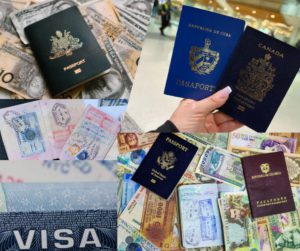
One unavoidable component of travel? Logistics. Although not all countries require a visa, if you’re traveling outside of the U.S., you will need a passport.
Your passport proves your identity, but take it from my experience — it’s better not to carry the original with you wherever you go, because if you lose it, replacing it can quickly become a nightmare. I’ve followed the “triple copy” rule for over 20 years.
- Keep a digital copy of your passport, including a clear photo of its data page (and visa, if applicable), saved to the cloud and on your phone
- Keep the original copy locked in the safe of your hotel or a locked suitcase
- Carry a color photocopy of the data page with you (but not in your wallet — more on that later) for daily identification
Add a physical card to your wallet with the local address of your program/residence, program director’s phone number, and phone number/location of your country’s embassy or consulate. This information becomes your lifeline if you lose your phone (or passport!).
Currency, credit cards and scams
Managing money
abroad requires a little knowledge to avoid excessive fees and scams. ATMs usually provide the best exchange rate — certainly better than most currency exchange booths, in my experience. Try to use ATMs in secure locations, like inside a bank lobby or airport, and withdraw larger amounts than you might immediately need to minimize those annoying transaction fees.
Tell your bank and credit card companies the dates and destinations of your travel before you leave. If you forget, these institutions may freeze your cards under suspicious foreign activity. While a great failsafe for when you aren’t traveling internationally, it’s a pain to reverse the hold.
Carry at least two different debit/credit cards and keep them in separate places (one in your wallet, one locked with your passport, or one hidden in a different pocket). Always carry some cash in the local currency for small purchases in places that don’t accept cards.
Be wary of common traveler scams, like the “accidental spill” or distraction tactics used by pickpockets in crowded tourist areas. Stay alert in busy areas, especially markets and public transport, and if you carry a bag, keep it zipped at all times and loop the straps around your arm or a chair leg when you’re sitting. You can also:
- Use anti-theft gear, like cross-body bags or money belts.
- Keep valuables (like your wallet and identification) in your front pockets or hidden.
- Research common scams where you’re traveling.
- Use RFID wallets, which protect cards from remote skimming.
The international first-aid kit
When you go exploring, things get, well, adventurous. You can’t always rely on a foreign apothecary, chemist, or pharmacy (depending on where you go) to have the brand or medication you know and trust. Make room in your luggage for a small, personalized first-aid kit.
- Guard your GI tract
The number one item to pack? A small bottle of Pepto-Bismol or Immodium. New foods and new water (even if you’re drinking bottled water) can mess with your stomach and digestive system. Better to have this item and not need it than be stuck in a hotel restroom wishing you had.
Before you travel, research the street food and tap water situation. If you’re going to Mexico or India, for example, assume the tap water isn’t safe to drink (including ice cubes and for washing fruit). Stick to bottled water, and pack electrolyte packets to rehydrate quickly. Street food in countries like Thailand and Vietnam is often safer than a mid-range tourist restaurant because the food is cooked fresh in front of you. But always err on the side of caution. It’s better to have an anti-diarrheal item and not need it than be stuck in your lodging wishing you had. - Blister band-aids and painkillers
You’re going to walk. A lot. When my students and I toured Italy and Greece, we averaged 20,000 steps per day (and some days, even more!). Those cobblestone streets that look so picturesque? Don’t be fooled. Your feet will not be happy after hours of walking. Pack blister-specific bandages like Band-Aid’s Hydro Seal or Dr. Frederick’s Original Better Blister Bandages. Those gel-filled cushions are lifesavers. Moleskin or friction-reducing sticks like Body Glide are great to apply before a blister even starts. Also, toss in a small supply of your preferred pain reliever (Tylenol, Advil, Aleve, etc.). You don’t want a headache ruining your day at a famous monument. - Personal prescriptions and allergy meds
If you need an EpiPen, inhaler, or other daily medicine, pack more than you need, and carry a copy of your prescription in case customs asks. Keep all medications in their original, clearly labeled containers. Even if you only get seasonal allergies, a small pack of Benedryl is a lifesaver for unexpected reactions to local pollens or foods. A mild reaction at home can escalate into a major inconvenience abroad. - Hand sanitizer and wet wipes
A simple truth of travel? Not every public restroom will have soap, and not every train car will be pristine. Stash a travel-sized hand sanitizer and a small pack of wet wipes in your bag. Your immune system will thank you! - Sunscreen and insect repellent
Don’t assume you can buy what you need when you land. International brands might not be the same quality (or have the same SPF) you’re used to. Pack a small, high-SPF sunscreen and an insect repellent for outdoor excursions. (And if you’re like me and beloved by mosquitoes, an anti-itch cream for the inevitable bites.) Dengue Fever and malaria are very real risks in many tropical regions, so don’t skimp on protection.
Chillin’ with the local vibe
There’s nothing quite so cool as living in a country for a little while, absorbing its sights, smells, and sounds, and gradually becoming more comfortable and familiar with your temporary home. I spent a lot of time people watching when I lived in France and Italy, and it didn’t take long for those observations to help me define each area’s cultural literacy. Whether you’re visiting for a week or two or living abroad for a summer or an entire semester, developing a sense of that cultural literacy will help you engage in a way that respects the flow of daily life.
Volume control
Japanese people value quiet and harmony, whether you’re riding a train, enjoying a public park, or wandering down a street. They view boisterous conversations (or taking a phone call while on public transit) as deeply inconsiderate. Keep your phone on silent/vibrate and your voice low whenever possible.
Mediterranean and Latin American countries, on the other hand, turn up the volume. Their people are more expressive. Expect to hear loud, passionate conversation in restaurants and on the street. In fact, if you tend to be on the quieter side, you may stand out and be seen as aloof! Lean into the warmth and accept that a higher ambient volume is completely normal (especially during football season!).
Dining etiquette
Fun things I learned from my multicultural friends:
- Don’t stick your chopsticks straight up in your bowl of rice in China or Korea. This position resembles incense at a funeral and is bad luck. Never pass food from chopstick to chopstick, which is also a funerary ritual. Rest them on the chopstick holder or the side of your plate.
- Loudly slurping your ramen or noodles in Japan is a compliment to the chef that shows you’re enjoying your meal. Don’t stress about eating silently.
- In many European countries, it’s customary and polite to keep your hands above the table, resting your wrists or forearms on the edge, rather than keeping them in your lap.
- If you don’t want to identify yourself as an American, avoid ordering a cappuccino after noon. Italians see it as a breakfast drink, and they think ordering a milky coffee after a meal is strange and bad for digestion. Opt for an espresso (a simple caffè) instead. Side note: I don’t know what it is, but an Italian espresso is strong! I ordered one while riding the ferry from Venice to Patras and after just a few sips, thought I could probably run alongside the ferry, on top of the water, and beat it to Greece!
Queuing and punctuality
In the UK, waiting in line (queuing) is a foundational cultural expectation. Never cut in line (line jump) for any reason. It’s a quick way to draw the silent (but deeply felt) ire of a Brit.
If you habitually run behind, set your watch ahead a bit when traveling in Germany or Switzerland, where punctuality is a sign of respect. Arriving late to a program, event, meeting, or social gathering is a serious misstep.
If you’re more of a “go with the flow” kind of person, Latin American countries offer a more flexible approach to time. It’s not uncommon for social gatherings to start 15-30 minutes after the stated time. It isn’t a matter of rudeness; it's just a different cultural norm. But check with your program coordinator for the local standard.
Traveling overseas is one of the most exciting things you’ll do. A few minutes of preparation now will set you up for a successful summer program that’s memorable for all the right reasons. And if you're still considering what program to choose, check out our latest Summer Programs Guide.

Blog Categories
- Career Advice
- College Admissions
- Colleges & Universities
- Financial Aid and Scholarships
- For Counselors
- For Parents
- For Students
- Gap Years
- Mental Health and Wellness
- Online Learning
- Performing and Visual Arts
- STEM Majors and More
- Summer Programs
- Teen Volunteering
- Trade & Vocational Schools
- Tutoring & Test Prep







Organization with listings on TeenLife? Login here
Register for Free
We’re here to help you find your best-fit teen-centered academic and enrichment opportunities.
Forgot Password
"*" indicates required fields