



Overnight Summer Camps: A Complete Guide for Parents and Students
Posted by
For adolescents and parents alike, attending overnight summer camps is an exciting milestone that creates lasting memories and fosters important life skills. But for first-time campers and their parents, the idea of spending time apart may feel less like a vacation and more like an emotional tightrope walk.
Despite these natural hesitations, many families still send their children to overnight summer camps. According to YouGov, 44% of adults have gone to an overnight camp. Of those who participated in this summer tradition:
- 83% reported a very or somewhat positive experience.
- 50% felt that attending overnight summer camps shaped who they are today.
- 68% attended overnight camps for multiple summers.
The transition from summer day camp to overnight summer camp offers countless benefits. From social and emotional growth to opportunities to explore new activities, overnight summer camps can open up a world of possibilities — especially when you select the right program.
This guide to overnight summer camps will outline what to expect. We’ll cover the pros and cons of enrolling in a summer day camp vs. an overnight camp, highlight how adolescents benefit from overnight summer camps, and offer advice on finding a program that’s the best fit. Plus, we’ve included tips for first-time campers (and their parents!) to help everyone feel more confident about taking the plunge.
Day vs. sleepaway camps
Let’s start by comparing two common types of summer camps for teens: day camps and overnight camps.
A summer day camp typically offers half- or full-day sessions. Campers participate in organized activities and head home each evening, with parents responsible for pick-up and drop-off. Program schedules are highly flexible. Sessions can run from one to five days per week, with lengths spanning a wide spectrum. A typical summer day camp, for example, could operate daily for a full week or run twice a week (e.g., Tuesdays and Thursdays) for four weeks.
Overnight summer camps typically span multiple days, with students staying in dedicated housing throughout the program. Like day camps, overnight summer camps vary in length. Campers might attend for a long weekend, opt for a full week, or enroll in a long-term camp lasting anywhere from two weeks to two months.
Day vs. Overnight Summer Camps for Teens
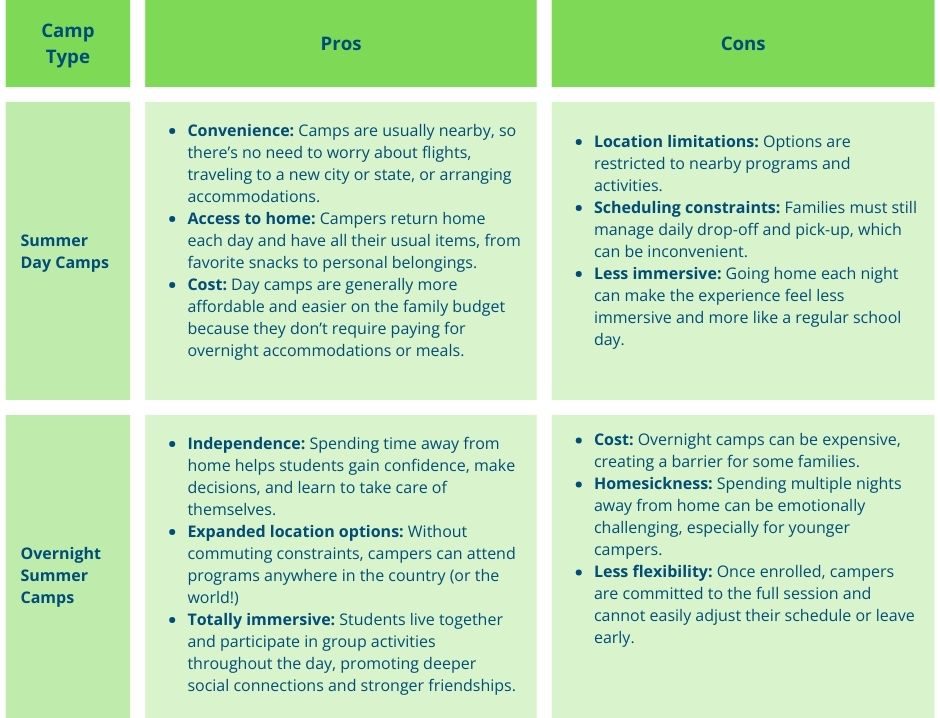
All summer camps for teens come with their own advantages and drawbacks. A summer day camp is more accessible, flexible, and cost-effective. Overnight summer camps cost more, but also offer a chance for your teen to step out of their comfort zone and explore a new environment. And, choosing the right camp for your child can offer incredible benefits that justify your investment.
The lasting benefits of overnight summer camps
Attending a camp for teens is a springboard for self-discovery and connection. Summer camps for teens help students transition into young adulthood and prepare them for future academic, social, and even career challenges.
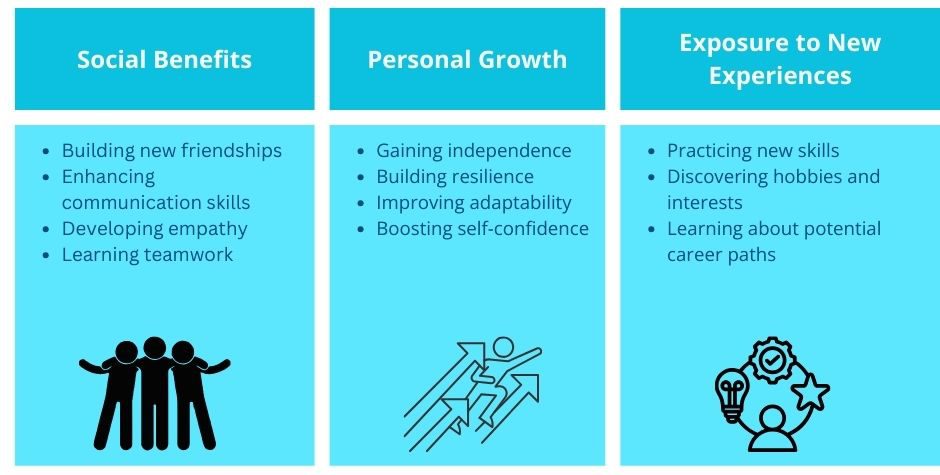
Socially, students can benefit greatly from overnight summer camps. Spending time with peers — particularly those a year or two older — offers teens a chance to connect and bond while gaining insights from older role models. For those who struggle to make friends, attending a summer camp for teens with similar interests can spark new friendships and lasting connections.
Overnight summer camps also encourage personal growth. Kids learn to monitor their own behavior, advocate for themselves, and collaborate with others in different activities. These experiences foster autonomy, encouraging students to operate independently of their home support system and cultivating self-reliance and greater responsibility.
While overnight summer camps are inherently novel experiences, they also serve as a gateway to new hobbies and interests. For instance, campers might try rock climbing, learn to play a new instrument, or join a theater production, discovering new skills and interests. Pre-college summer programs might inspire an academic path, helping students explore different subjects and even potential majors.
Parents benefit from overnight summer camps, too. They get a much-needed breather while also gaining confidence in their child’s self-reliance and decision-making abilities away from home. The easiest way to build a strong foundation for that trust? Choosing a program designed to be safe, rewarding, and memorable.
Choosing a program that fits your child
Here are four major factors to consider when exploring overnight summer camps:
- Age/Maturity: A summer camp for teens aged 15-16 will look very different from one for 8-10-year-olds. Research camps offering the appropriate activities and supervision for your child’s age group. Consider how the setting and programming align with your child’s maturity level.
- Interest/Goals: Specialized programs are great for kids with particular interests. For example, a camp for teens interested in coding might include beginner-friendly projects such as designing simple games or apps. A camp for teens interested in art might teach drawing and painting techniques and give them time to build a small portfolio.
- Safety: A major factor in choosing an overnight camp for teens is the program’s approach to participant safety. Research camper-to-staff ratios, staff credentials, the surrounding area, curfew policies, and supervision of the living spaces.
- Budget: Summer camps for teens, especially overnight summer camps, are expensive. If a camp’s cost doesn’t fit your budget, ask about scholarships or financing. Additionally, consider shorter programs closer to home that don’t require additional transportation (like flights) or have lower overall program fees, which can get pretty high if your child attends a residential program hosted on a university campus, for example.
Look for overnight summer camps with positive reviews. Some camps even offer virtual tours or interviews with past campers, providing a more authentic preview of the experience. It can also be helpful to speak with a camp representative who can answer specific questions and address potential concerns.
Supporting independence in middle schoolers
Overnight summer camps might conjure parents’ memories of summers spent outdoors, sharing bunk beds, and enjoying fun activities with new and old friends. But sending your tween away for a week or longer might create some anxiety about their ability to handle life away from home.
While a little parental or tween apprehension is perfectly normal, overnight summer camps are nothing to fear. Overnight camps offer a genuine opportunity for young kids to develop independence in a supportive, structured environment.
Since not all overnight camps are the same, finding the perfect match takes some thought. One easy trick? See if your kid has a friend or two who want to go along. Signing up with buddies is an awesome confidence booster, giving them a familiar support crew before they even pack their bags.
On the other hand, summer camps for teens are a great way to meet new friends who share similar interests. If your child is going it alone, look for a camp aligned with one of their interests. Do they like robotics, theatre, or sports? Research overnight camps that align with their interests and offer dedicated activities.
Want to build excitement and help them feel ready for camp? Involve them in the whole pre-camp process. Look at programs together, review the daily schedule, and let them take the lead on packing their bags. Doing this prep work as a team helps your child feel responsible for their trip and opens up easy chances to discuss what they’re excited or nervous about, so they know what to expect when they arrive.
Easing first-time sleepaway anxiety
Overnight summer camps can be intimidating to first-time campers. The key? Talk about their jitters before camp starts. Here are some tips to help address those butterflies in their stomach:
- Ask your child how they’re feeling. To help them open up, you might chat about past sleepovers with their friends. Explain that overnight summer camps are similar to an extended sleepover. Don’t minimize their concerns. Instead, try to get specific — are they concerned about the activities? Meeting new adults? Not making any friends? Let them articulate what’s making them nervous first. Once you know the real stressor, you can easily talk through strategies to address those worries.
- Create a communication plan. Whether your kid is gone for a long weekend or two weeks, make a plan to stay in touch. First, the phone question: Can they bring and use a cellphone at camp? If so, decide whether you’ll stick to calls, texts, or even email pen pals. If they don’t have a cellphone, what’s the check-in plan? The best rule of thumb? Find a balance that helps you keep in touch without over-communicating — how often you connect will likely depend on the camp’s length.
- Pack comfort items. Having things from home — like letters, photos, a favorite stuffed animal — can be a big reminder that your camper’s still connected to you, even when you’re apart. The goal is to help them feel extra comfortable and secure.
Finally, emphasize that feeling nervous about being away from home is normal, especially if they’ve never done it before. Remind them of all their other first times, like riding a bike, navigating a new school, or learning a new sport. Finding the confidence to push past their fears will help them prepare for the challenges and new experiences ahead.

Helping high schoolers find the right challenge
Overnight summer camps for high schoolers cover a huge range of possibilities (and look great on college applications). As they mature and become more independent, high schoolers can handle longer-term programs and more challenging opportunities, like pre-college summer programs held on college campuses.
A well-structured camp for teens in high school recognizes their maturity and interests. The right camp emphasizes both independence and structure while ensuring proper safety and an appropriate level of adult guidance. The best summer camps for teens in high school:
- Offer both structured activities and free time. Scheduled activities such as classes, field trips, or hands-on projects help your teen learn and develop new skills. Free time gives them space to relax, avoid burnout, and explore hobbies they enjoy.
- Balance rigor with social opportunities. One of the biggest benefits of summer camps for teens is the opportunity to connect with like-minded peers. If your student wants to challenge themselves with an advanced course or pre-college program, make sure the heavy class load still leaves plenty of room for fun and connecting with their fellow campers.
- Include leadership, mentorship, or specialized skill-building programs. While many camps focus on a single interest, like soccer or robotics, the best summer camps for teens offer a well-rounded experience. Programs that offer a mix of activities, challenges, and learning opportunities will help teens make the most of their summer.
Career exploration
One of the biggest benefits of summer camps for teens is exposure to advanced academic subjects and potential career paths. Programs focused on career exploration cover various topics, including STEM, healthcare, business, and the arts. With opportunities to hear from guest speakers and participate in hands-on learning, students gain a first-hand glimpse into their future. Plus, these camps help strengthen college applications by providing valuable experiences to include in activity lists and references in college essays.
Tips for parents before camp starts
There are many ways to prepare for an overnight summer camp. This checklist can help you get started:
- Register for camp: Complete and submit all required paperwork (e.g., medical/health, registration, emergency contact, and legal/consent forms) and pay any fees.
- Set expectations: A quick talk with your child goes a long way. Cover the camp activities, how they should interact with counselors, and their thoughts on making new friends.
- Talk about safety: Review camp rules, the daily schedule, and safety procedures. Make sure your child knows what to do in an emergency.
- Create a packing list: Overnight summer camps typically send a list of what to bring. Use that list to guide what your child packs, like weather-appropriate clothing, a poncho, hiking shoes, or swimwear, depending on camp activities.
- Prepare for separation: Discuss how your teen can handle common challenges at camp, and establish clear communication plans so both of you feel secure.
- Start building independence now: If camp is a few weeks (or months) off, increase your teen’s responsibilities now. Completing household chores, doing their own laundry, and helping with meal planning (or even cooking one meal a week) builds confidence. When it’s time to leave for their overnight summer camp, they can pack and calculate their budget, if they’re allowed to bring money for snacks or souvenirs.
Overnight summer camps - Takeaways
An overnight summer camp for teens offers more than a change of scenery — it provides a unique environment for kids to learn and grow. As you begin exploring different summer camps for teens, keep these key takeaways in mind:
- Overnight camps build independence. Living away from home gives teens a safe space to make decisions, take responsibility, and gain confidence as they learn to navigate new social situations.
- Choosing the right camp matters. A program that matches your child’s age, interests, personality, and safety needs sets them up for a fun, rewarding experience.
- Summer camps for teens open the door to new experiences. Teens can try activities they’ve never done, discover hidden talents, and even explore potential career paths through hands-on scenarios.
Preparation makes the first time less intimidating. Involving your teen in the planning, packing, and expectation chats is the best way to get them feeling ready, excited, and confident about the adventure ahead. Looking for summer camp programs? Check out our Guide to Summer Programs.

Stefanie Tedards
Stefanie Tedards is a freelance writer and Senior Copy Editor at CollegeAdvisor.com. Since graduating from Northwestern University with a degree in Communications, she has worked in advertising, video production, and volunteered as a WWOOFer on farms across the world.
Blog Categories
- Career Advice
- College Admissions
- Colleges & Universities
- Financial Aid and Scholarships
- For Counselors
- For Parents
- For Students
- Gap Years
- Mental Health and Wellness
- Online Learning
- Performing and Visual Arts
- STEM Majors and More
- Summer Programs
- Teen Volunteering
- Trade & Vocational Schools
- Tutoring & Test Prep








Organization with listings on TeenLife? Login here
Register for Free
We’re here to help you find your best-fit teen-centered academic and enrichment opportunities.
Forgot Password
"*" indicates required fields