



Green lights and red flags: Evaluating summer programs
Posted by
Choosing the right summer program for your child can feel like navigating a corn maze that takes hours to escape. As parents, we want the best for our kids — opportunities that pique their interest, develop their skills, and create wonderful memories. But with all the options and often significant financial investment these programs require, how do you know you’re making the right choice?
Although you’re buying a product, you’re investing in your child’s growth, confidence, and future. The pressure is real, especially when top-tier programs command tuition rivaling a semester of college. This comprehensive guide gives you the detailed criteria you need to evaluate summer intensive programs with confidence. We’ll walk through what to look for in the facility, faculty, curriculum, administration, and overall culture, highlighting green lights (indicators of quality) and potential red flags (warning signs).
Remember, the goal isn't to scrutinize every tiny detail, but to gather enough information to feel secure that you’re investing in a valuable and enriching experience for your child.
The big picture: What “quality” really means
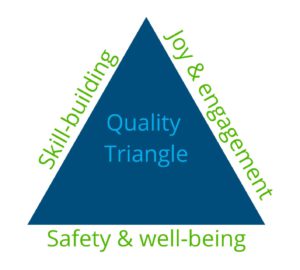 A “good” summer intensive isn’t just the most prestigious, expensive, or selective option but the one that provides a safe, structured, and emotionally healthy environment. Your child should thrive, growing their skills, confidence, and independence. High-quality programs tend to combine clear learning goals with supportive relationships and thoughtful logistics, rather than relying on a brand name or glossy marketing.
Quality also looks like alignment. The program’s focus, pace, and culture should match who your child is right now (not who you wish they were or imagine they’ll be in five years). For some kids, a high-intensity conservatory is a great fit. Others might need a more nurturing environment, mixing enrichment and fun while encouraging experimentation and exploration.
Facilities
A summer program’s physical environment shapes how your child feels day to day — safe or uneasy, energized or drained, inspired or bored. While aesthetics matter, so does safety, functionality, and suitability for the program’s focus. The facility's condition reflects the organization’s commitment to its participants.
When you visit (in person or virtually), imagine your child moving through a typical day.
- Where are they learning?
- Where are they relaxing?
- Where are they eating?
- Where will they go if they need help?
Walking through this mental map often reveals details that a brochure can’t.
Cleanliness and maintenance are the baseline. A well-maintained facility, from restrooms to studios and common areas, shows that a program prioritizes its environment, staff, and participants’ well-being. Look for evidence of regular cleaning schedules.
Appropriate spaces for activities
- Performing arts: Look for dedicated studios equipped with proper sprung flooring (essential for dance safety), full-length mirrors, sound systems, and sufficient space to move. Ideally, rehearsal rooms should be soundproofed or equipped with acoustic baffles.
- Visual arts: These programs should feature well-lit studios with ample workspace, proper ventilation and exhaust fans for paints or chemicals (especially in photography and ceramics), and access to equipment (kilns, easels, printing presses, dark rooms).
- STEM/academic: Modern classrooms, well-equipped labs with the latest technology, and safe experimental environments.
- Sports: Well-maintained courts, fields, or gyms with appropriate safety padding and equipment.
Safety measures
Look for well-marked fire exits, posted evacuation routes, and visible first-aid stations. Can staff clearly explain emergency procedures without hesitation? Check for locked entryways, sign-in/out procedures, and whether the campus is accessible for participants with disabilities (elevators, ramps, accessible restrooms). Ask about supervision ratios, especially for younger children.
Dormitories/housing (for residential programs)
Living spaces should be clean, supervised, and age-appropriate. Think safe, simple, and comfortable, not a luxury resort. Ask about roommate policies, curfews, overnight staff, quiet hours, and adult-to-student ratios in residential areas.
Dining facilities
Look for a cafeteria or dining hall that feels clean and organized, with healthy, varied meal options that include fruits/vegetables, and accommodates common dietary needs (vegetarian, allergies, religious restrictions). Programs that ask for allergy information up front and explain how they handle cross-contamination indicate that they prioritize health and inclusion.

| 🔴 A run-down or neglected appearance: Peeling paint, broken fixtures, and dirty common areas can suggest a lack of care or insufficient funding.
🔴 Unsuitable spaces: A dance program using a carpeted room, an art program with poor lighting or ventilation, or a STEM program with outdated or broken equipment. 🔴 Lack of visible safety protocols: No fire extinguishers, unmarked exits, or a general sense of disorganization regarding safety. 🔴 Overcrowding: Spaces that feel cramped or have too many students for the size of the room. 🔴 Poor online presence of facility: If the program highlights “state-of-the-art” facilities but doesn’t post photos on its website or offer virtual tours, be wary. |
| Quick checklist for facilities
✅ Visit in person, if possible, or request a video walk-through. ✅ Look at photos/virtual tours online. ✅ Ask about safety protocols, supervision, and accessibility. ✅ Inquire about specific equipment needed for your child’s program (labs, studios, sports, etc). |
Faculty and instructors
The people your child interacts with daily matter more than the building or brochure. Instructors and staff shape skills and knowledge and how safe, seen, and motivated your child feels. You’re looking for a combination of subject matter expertise, youth experience, and someone who genuinely loves kids. A superstar in their field who doesn’t like teaching young people isn’t as valuable as a solid professional who understands how kids learn and feel.
Expertise and experience
Instructors should have strong backgrounds in their respective fields (professional experience, advanced degrees, significant teaching accolades). You should be able to read their resumes or bios. For example, look for:
- Performance or exhibit history for arts programs
- Practical industry or research experience for STEM programs
- Coaching certifications and playing experience for sports programs
Passion and engagement
Ask how instructors describe their teaching philosophy. Do they sound enthusiastic and genuinely interested in nurturing young talent? Programs highlighting mentorship, a growth mindset, and relationship-building often create more positive experiences than those focused entirely on competition.
Clear communication
Instructors should be able to articulate their teaching methods, goals for students, and how they provide feedback. Some programs offer mid-session check-ins or parent summaries, which can help you understand what your child’s been doing and how they’re progressing.
Appropriate credentials
For programs involving minors, confirm that all faculty and staff have undergone background checks and have relevant certifications (CPR, first aid, youth protection training).
Positive testimonials
Read feedback from past students and parents, and look specifically for positive reviews.
Reasonable student-to-teacher ratios
Smaller numbers enable more individualized attention and feedback. While the “right” ratio varies by activity and age, programs should be able to share and justify their target ratios.
Support staff
Strong programs also have counselors, residential advisors, and medical staff who focus on social-emotional support, homesickness, and day-to-day well-being. This support is especially important for residential intensives where participants are away from home for the first time.
| 🔴 Vague or absent instructor biographies: If you can’t find clear information about who’s teaching, or their experience seems thin, or bios are short on specifics and full of buzzwords, that’s a red flag.
🔴 Lack of background checks: These checks are a non-negotiable safety concern. If a program is evasive about background checks, training for working with youth, or staff turnover, walk away. 🔴 “Celebrity” instructors who are rarely present: Some programs advertise big names, but these individuals may make only brief appearances and may not actually teach the core curriculum. Clarify their involvement. 🔴 Overly large class sizes: If the student-to-teacher ratio seems high, it’s unlikely that your child will receive adequate individual attention. 🔴 Negative reviews: Look for consistent complaints about instructor quality, engagement, or professionalism. 🔴 Unprofessional conduct (if observed): Any signs of disinterest, impatience, or inappropriate behavior from staff. |
Quick checklist for faculty✅ Thoroughly review instructor bios and look for specific experience with youth. ✅ Ask about background check policies and youth protection training. ✅ Inquire about typical class sizes and student-to-teacher ratios. ✅ Read testimonials specifically mentioning instructors, not just the campus name or brand. |
The curriculum
If facilities and faculty are the hardware of a summer program, the curriculum is the software. It should be well-structured and flexible, with clear learning goals, age-appropriate content, and room for exploration.
Look for a program that knows exactly what it’s trying to do, like build foundational skills, deepen expertise, expose students to a particular field, or help them explore other interests, and has a plan for getting there.
Detailed schedule and content
A clear, published schedule outlining daily activities, classes, and specific skills/topics to be covered. Some programs may have a more general list of featured topics for each day. Vague language alone (“we’ll do lots of science”) makes it hard to understand what your child will actually learn.
Clear learning objectives
Can you tell what your student will learn, understand, or be able to do by the end of the session? For example, will they complete a capstone project, perform in a showcase, present research, or receive a portfolio review? Concrete outcomes help you and your child assess whether the program fits their goals. The curriculum should also be designed with the developmental stage of the target age group in mind.
Progression and challenge
Intensive summer programs should have a clear path for skill development and offer opportunities to challenge students at their current level. Placing students by level (auditions, placement tests, questionnaires, etc.) is a positive sign, as this approach prevents boredom for advanced kids and overwhelm for beginners.
Performance/showcase opportunities (if applicable)
Arts programs should have opportunities for students to perform, exhibit work, or present their findings. STEM and other programs can also feature a showcase for students to share what they have learned, created, or accomplished.
Constructive feedback mechanisms
Strong curricula include feedback structures: one-on-one conferences, written or oral evaluations, and small-group critiques. Programs that support goal-setting and reflection via journaling or progress notes help your student leave with a clearer sense of what they’ve gained and learned.
A balance between work and rest
“Intensive” should not mean “exhausting to the point of burnout!” Look for breaks, social interaction, outdoor time, and fun. Low-pressure evening events can actually boost learning and creativity.
Materials and resources
You should know up front which materials the program includes and which you must provide. What resources (library, practice rooms, labs) are available? The program should clearly communicate any additional fees for performances, exhibitions, trips, or certificates to help you budget.
| 🔴 Vague or generic curriculum description: “We’ll do a lot of art!” isn’t as helpful as “Students will learn foundational drawing techniques, explore watercolor landscapes, and complete a mixed-media final project.”
🔴 Overly ambitious or unrealistic promises: Be skeptical of programs promising professional-level skills in a very short time, especially for beginners. “Become a professional-level coder in two weeks, no experience needed!” isn’t realistic for someone just learning a new skill. 🔴 Lack of differentiation: A “one-size-fits-all” curriculum is less likely to cater to different skill levels within a group, especially in academic, STEM, or pre-college programs. 🔴 Excessive downtime or unstructured time: While balance is good, an “intensive” program shouldn’t have large blocks of unsupervised or unproductive time. 🔴 No clear end product or learning outcome: If there’s no way to gauge what your child has learned or achieved (a final product, showcase, or way for students to see and celebrate their growth), it’s harder to assess value. 🔴 Hidden costs: Are there extra fees for materials, performances, or excursions that weren’t clearly stated up front? |
Quick checklist for curriculum✅ Request a detailed schedule and curriculum outline. ✅ Ask about learning objectives, progress assessments, and outcomes students can expect by the program’s end. ✅ Ask about opportunities for feedback and clarify student grouping/placements by age or experience. ✅ Confirm what tuition includes and what costs extra. |
Safety, supervision & logistics
While checklists are invaluable, listen to your intuition, too. Even the most inspiring curriculum doesn’t matter if basic safety, supervision, and logistics feel shaky. You’ll feel more confident knowing who’s responsible for your child at each point in the day (and overnight) and how the program staff handles emergencies.
Safe programs have consistent, boring systems — sign-in sheets, check-ins, rules about leaving campus — because consistency keeps kids safe, especially in unfamiliar environments.
Clear supervision structures
You should know who supervises students during classes, meals, transitions, free time, and overnight stays (if residential). Programs should train staff in supervision and have clear protocols for headcounts, transitions, and field trips.
Transparent health and wellness policies
Look for written policies on medications, illness, mental health support, and what happens if a child is injured or must go home early. A designated health staff member (nurse, EMT, or equivalent) should be on staff, especially for larger or residential programs.
Thoughtful daily logistics
Drop-off and pick-up procedures should be transparent and secure, with rules about who can sign out students. For residential programs, ask about luggage drop-off, check-in, and how staff help students navigate arrival and departure days. Well-planned logistics reduce stress for parents and kids.
| 🔴 Vague answers about who supervises students outside of formal class time
🔴 No written policies on emergencies, illness, or mental health — or staff who seem unfamiliar with them. 🔴 Confusing or inconsistent sign-in/sign-out or visitor procedures. 🔴 A culture that downplays parental questions about safety as “overprotective” instead of responding with clear information. |
Culture
Culture refers to the program’s “feel,” or the unwritten rules about how people treat each other, which behaviors get rewarded, and what the program encourages students to value. Culture shows up in how instructors correct mistakes and how staff talk about other programs or schools.
The right culture for your child will align with your family values and your child’s temperament. Some kids thrive in highly competitive, performance-driven environments; others need a more collaborative, nurturing space to take risks and grow.
Program values
Read how the program describes its mission. Does it emphasize character development? Creativity? Collaboration? Inclusion? Leadership? Look for values that echo what you want for your child.
A focus on belonging and inclusion
Programs that mention supporting diverse learners, anti-bullying policies, and inclusion for different backgrounds and identities put effort into making each participant feel welcome. Ask how staff handle conflicts, teasing, or social challenges that arise among kids.
Communication
Before enrolling, pay attention to the staff’s responses to your emails or calls. Are they timely, clear, and patient with questions? Strong programs see parents as partners, not annoyances.
Honesty about outcomes and limits
Programs should not hide what they can and can’t offer. If a program says, “We’re great at giving your child a taste of this field, but it’s not a selective research program,” that honesty is a green light.
| 🔴 Staff or marketing copy dismissing other programs, schools, or paths as inferior.
🔴 Overemphasis on prestige or name recognition with little talk about student well-being or joy. 🔴 Unclear responses when you ask how they handle issues like bullying, social conflicts, or homesickness. 🔴 A communication style that’s defensive, impatient, or noticeably inconsistent from one staff member to another. |
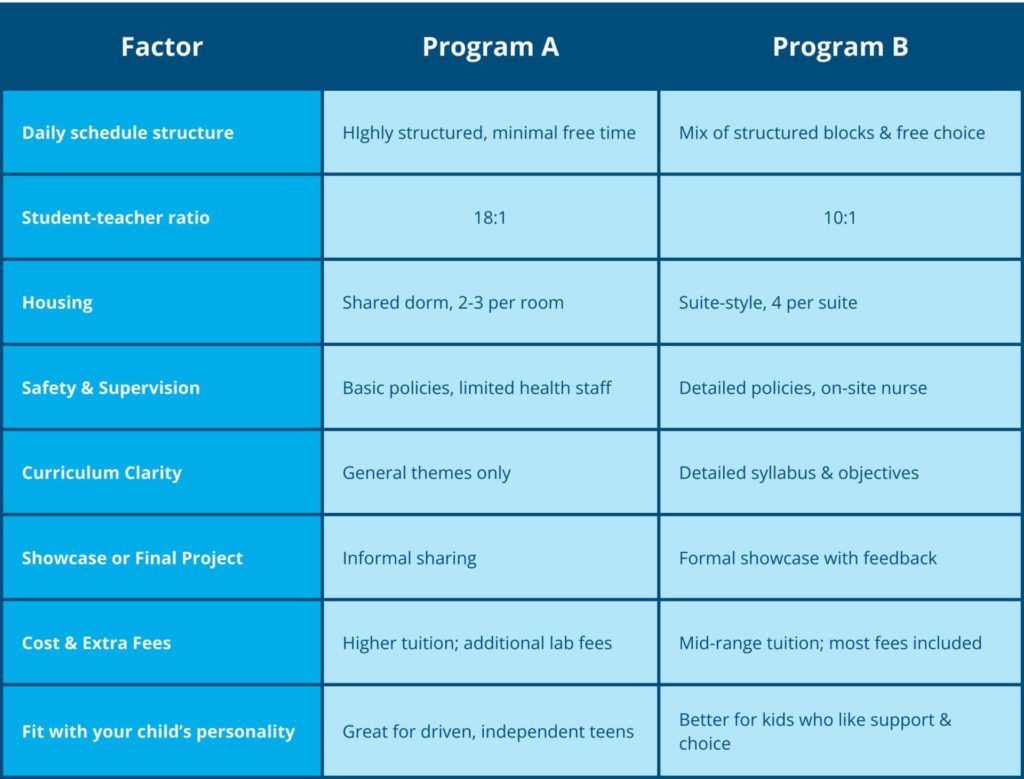
Comparing summer programs
A simple table like this can help you see patterns and align choices with your child’s needs and your non-negotiables.
Trust your gut (and your child)
Checklists are powerful, but not the whole story. After you’ve toured, emailed, compared, and read reviews, it helps to pause and listen to your instincts.
Ask yourself:
- Do the program’s values and tone feel like a good fit for your family?
- Do the people you’ve spoken with seem to genuinely like working with kids and teens?
- Does the environment feel safe, welcoming, and aligned with what you know about your child’s temperament and needs?
Don’t forget to include your kiddo in your conversation. Show them photos and sample schedules. Discuss different options and note the programs they keep coming back to. If they light up when talking about a specific program — and it passes your safety, quality, and budget checks — consider their enthusiasm as a brilliant green light.
Putting it all together
Choosing a summer program is a significant emotional and financial decision, but it doesn’t have to be a leap in the dark. Evaluating facilities, faculty, curricula, safety, culture, and communication — and combining that research with your own observations and instincts — gives you a balanced, grounded decision-making framework.
With this thoughtful approach, you’re doing more than purchasing a week or month of structured time; you’re selecting an experience that can grow your child’s skills, expand their world, and help them confidently step into the next school year. Not sure where to start? Check out our latest Guide to Summer Programs.

Blog Categories
- Career Advice
- College Admissions
- Colleges & Universities
- Financial Aid and Scholarships
- For Counselors
- For Parents
- For Students
- Gap Years
- Mental Health and Wellness
- Online Learning
- Performing and Visual Arts
- STEM Majors and More
- Summer Programs
- Teen Volunteering
- Trade & Vocational Schools
- Tutoring & Test Prep







Organization with listings on TeenLife? Login here
Register for Free
We’re here to help you find your best-fit teen-centered academic and enrichment opportunities.
Forgot Password
"*" indicates required fields